Gutter Guards & Leaf Protection for Airdrie Homes
An eavestrough only protects your house while it stays open from the roof edge to the downspout outlet. In Airdrie that channel fills with spruce needles, seeds, cottonwood fluff and shingle granules, and a plugged trough overflows at the foundation in summer and freezes solid in winter. Gutter guards keep the debris out, and we will tell you which type your house actually needs, or whether it needs one at all.
How These Systems Differ
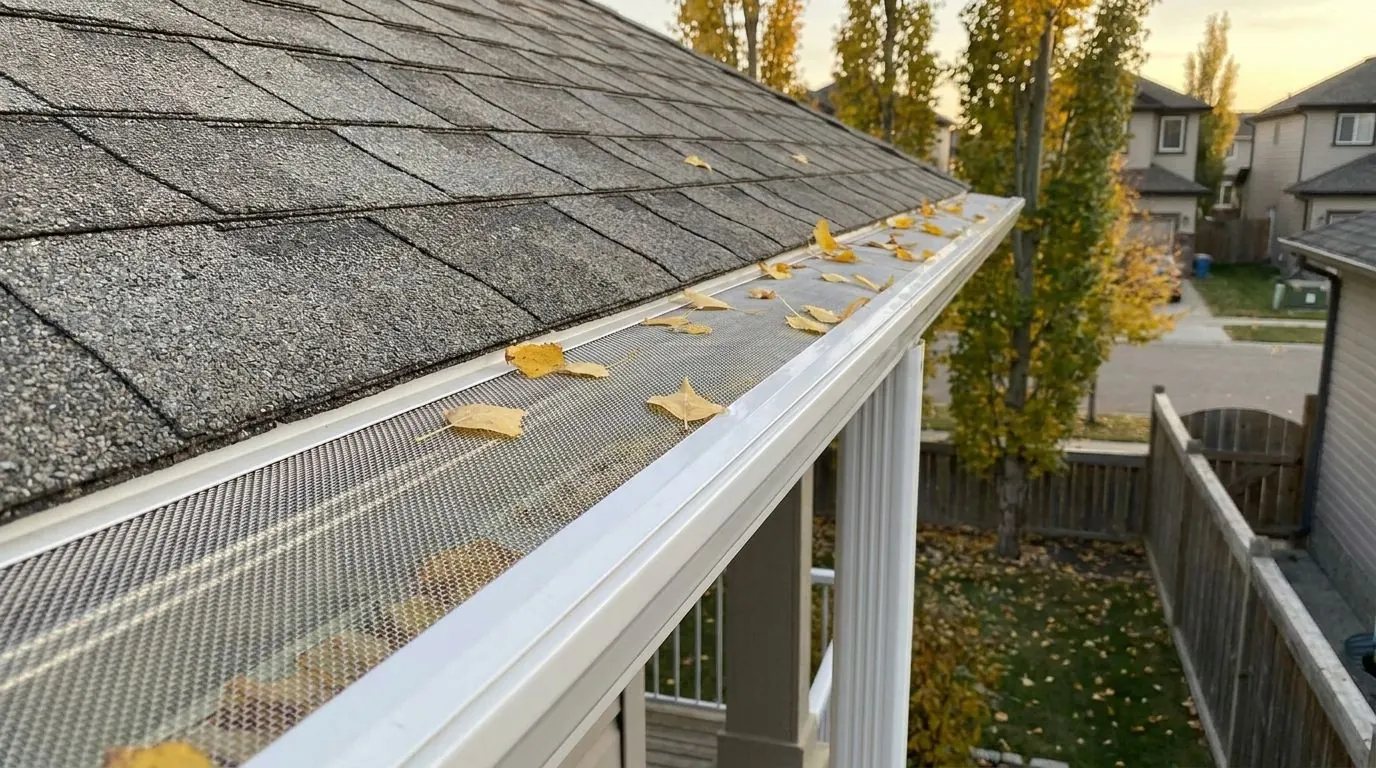
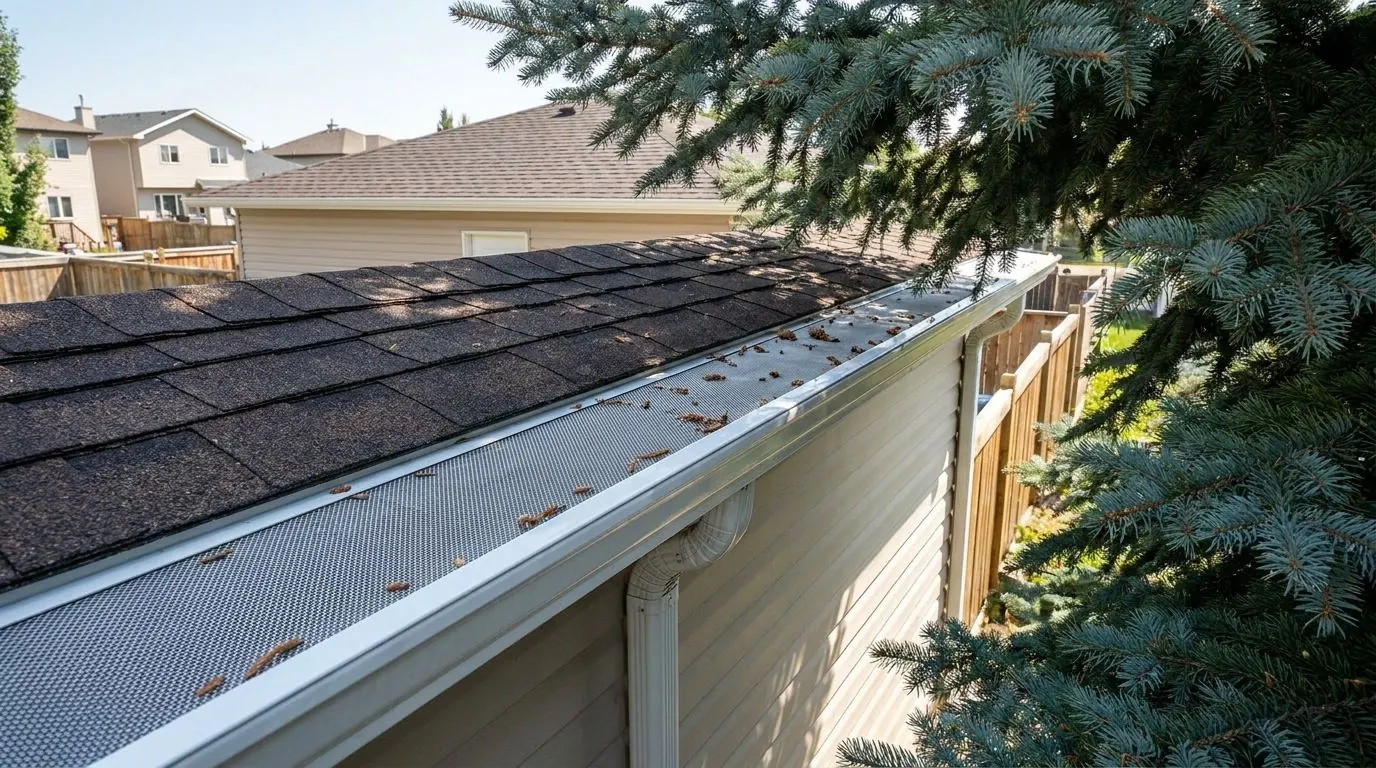
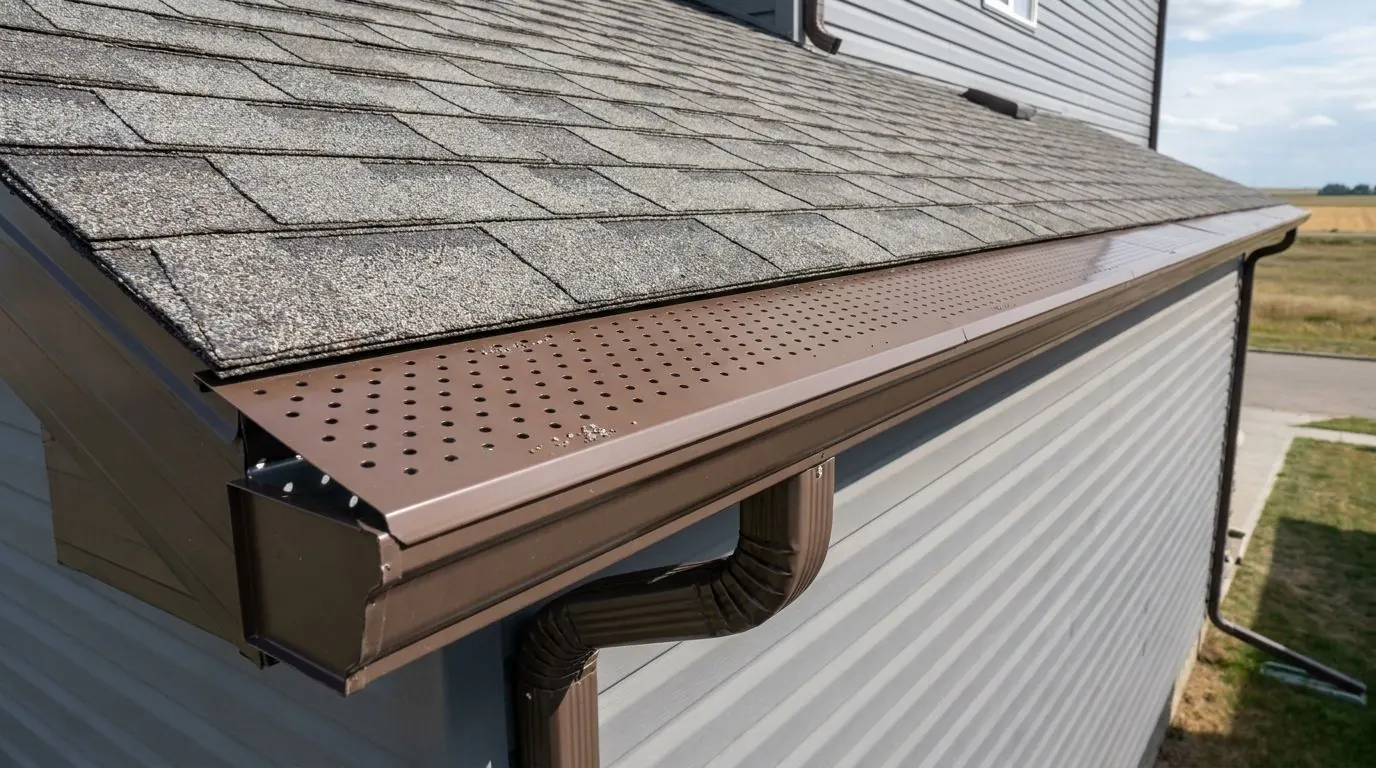
This family covers two systems that protect the gutter rather than replace it. Micro-mesh guards lay a fine stainless-steel screen on a rigid aluminum frame across the top of the trough, stopping spruce and pine needles, seeds and shingle granules before they reach the channel. Perforated aluminum covers use a stiff punched sheet that sheds leaves and twigs and takes hail and ladder contact well. Both sit across the opening of an eavestrough you already have, or one we install at the same time, and both are fastened so they don't lift or crack the shingles along the roof edge.
The two types differ mainly in what they let through and how much abuse they take. A fine mesh catches small debris that slips past larger openings, so it suits homes under conifers or with aging, granule-shedding shingles, and it needs an occasional soft-brush rinse of its surface to keep water flowing through. A perforated cover passes fine grit into the trough, so it still needs a flush from time to time, but its stiffness makes it a practical choice where hail, wind and large deciduous leaves are the main concerns. Neither type prevents snow or ice from sitting on top in winter, and neither makes a gutter maintenance-free.
What both share is a condition: they only work on eavestroughs that are sound, properly sloped and firmly anchored. A guard on a sagging, leaking or undersized gutter hides the fault rather than fixing it, and it makes the fault harder to see from the ground. Guards also add a little weight and a surface that snow can load, so the hangers underneath matter. We check the gutter first every time: slope, hanger spacing, corner seals and whether the downspouts are clear. Where those are right, a guard turns a twice-a-year ladder job into an occasional check. Where they aren't, we fix the trough first and quote the guard second.
Gutter Guards Services
Choosing Between Them
- Needles and fine grit: micro-mesh
- If your eaves sit under spruce or pine, or your shingles are shedding granules, choose micro-mesh. Needles and grit pass through coarser covers and settle in the trough where you cannot see them.
- Leaves, hail and wind: perforated
- If large poplar or aspen leaves are the load and your lot is exposed to hail and wind, choose perforated aluminum covers, usually screwed to the gutter lip so they stay down.
- Different eaves, different guards
- A house can take both. Mesh on the runs under a spruce and perforated covers on the open, hail-exposed side is a sensible split, and runs that never collect debris can be left bare.
- Ice at the eaves: not a guard problem
- If your complaint is ice building along the eaves every winter, a guard will not fix it. That points to attic heat loss and the roof edge, so start with an ice-dam assessment before paying for guards.
Gutter Guards: Common Questions
Can I mix micro-mesh and perforated covers on the same house?
Do I need gutter protection on every eave of my house?
Should I replace old eavestroughs before adding guards?
Other Eavestrough Services
Talk to Us About Gutter Guards
Tell us about the house or building and what the water is doing. We will recommend the system that fits, including when a simpler one will do.