Aluminum Soffit, Fascia Capping & Drip Edge Installation in Airdrie
Your eavestrough is only as good as the roof edge it hangs from. Aluminum soffit, fascia capping and drip edge flashing work as one system that keeps the attic breathing, the wood dry and roof water landing inside the gutter, and we install all three for Airdrie homes and the communities around them.
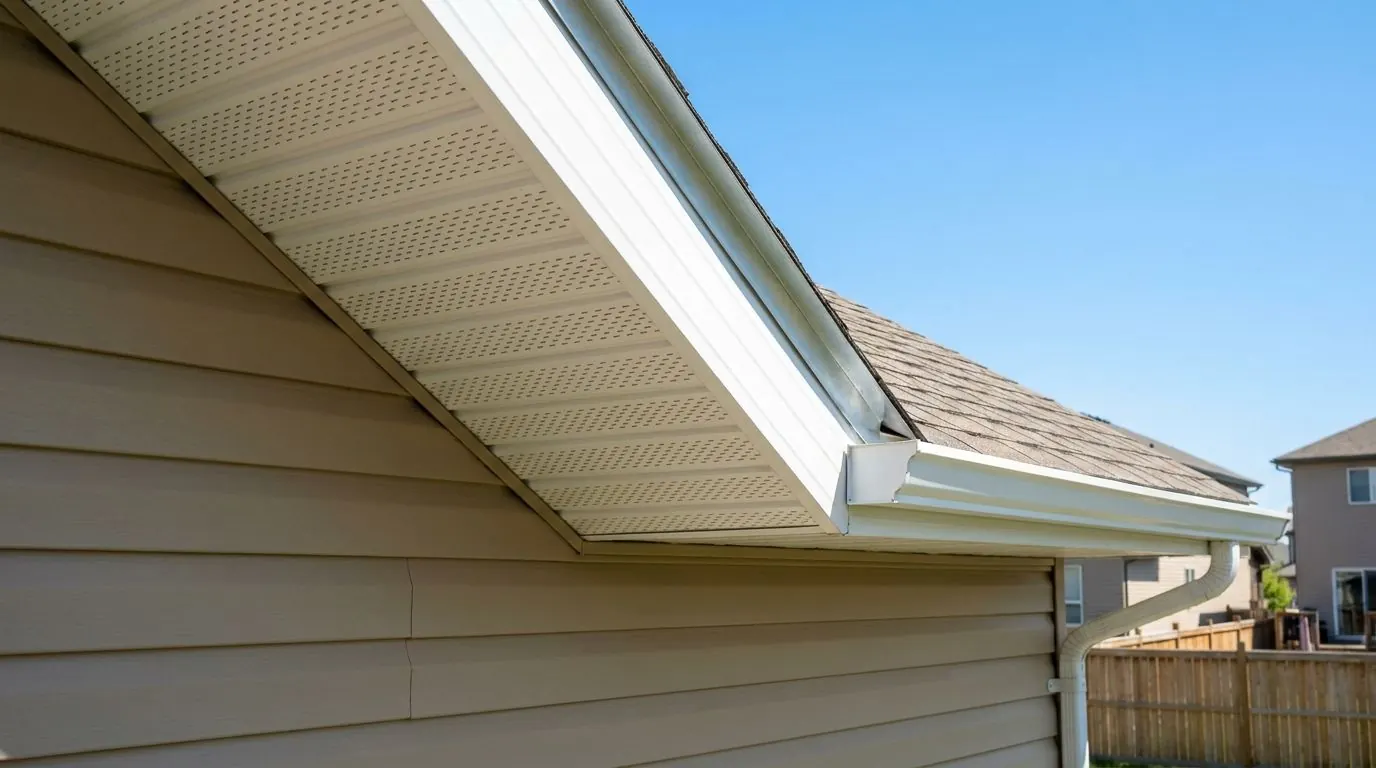
How These Systems Differ
Rain and snowmelt leave the shingles there, the eavestrough hangs there, the attic draws its intake air there, and in an Airdrie winter it is where Chinook melt and overnight refreezes do most of their work. Three components protect it. Drip edge is the metal flashing at the very edge of the roof that sends water off the shingles and into the eavestrough. Fascia is the board along the rafter ends that carries the eavestrough, and aluminum capping wraps it so it never needs paint and stays dry. Soffit closes the underside of the overhang and, where it is vented, feeds outside air into the attic.
Each part does a different job, and they overlap in a specific order that matters. The drip edge laps over the top of the fascia capping so runoff lands on the outside of the metal. The capping’s bottom return laps over the soffit edge. The eavestrough mounts over the capping, with its hangers screwed through into solid wood, and sits where the drip edge releases water into it. When one layer is missing or lapped the wrong way, water finds the gap: it runs behind the trough, soaks the top of the fascia, drips onto the soffit and stains the siding below.
The options within the category are about fitting each piece to the house. Soffit comes in vented panels for eaves that open into the attic and solid panels for overhangs with no attic behind them. Fascia capping is bent on site from heavy-gauge coil to the real dimensions of your boards. Drip edge is installed in the correct layer order on a new roof or retrofitted under the first course of shingles on an existing one. All three are prefinished aluminum, colour-matched to your eavestrough.
Soffit, Fascia & Drip Edge Services
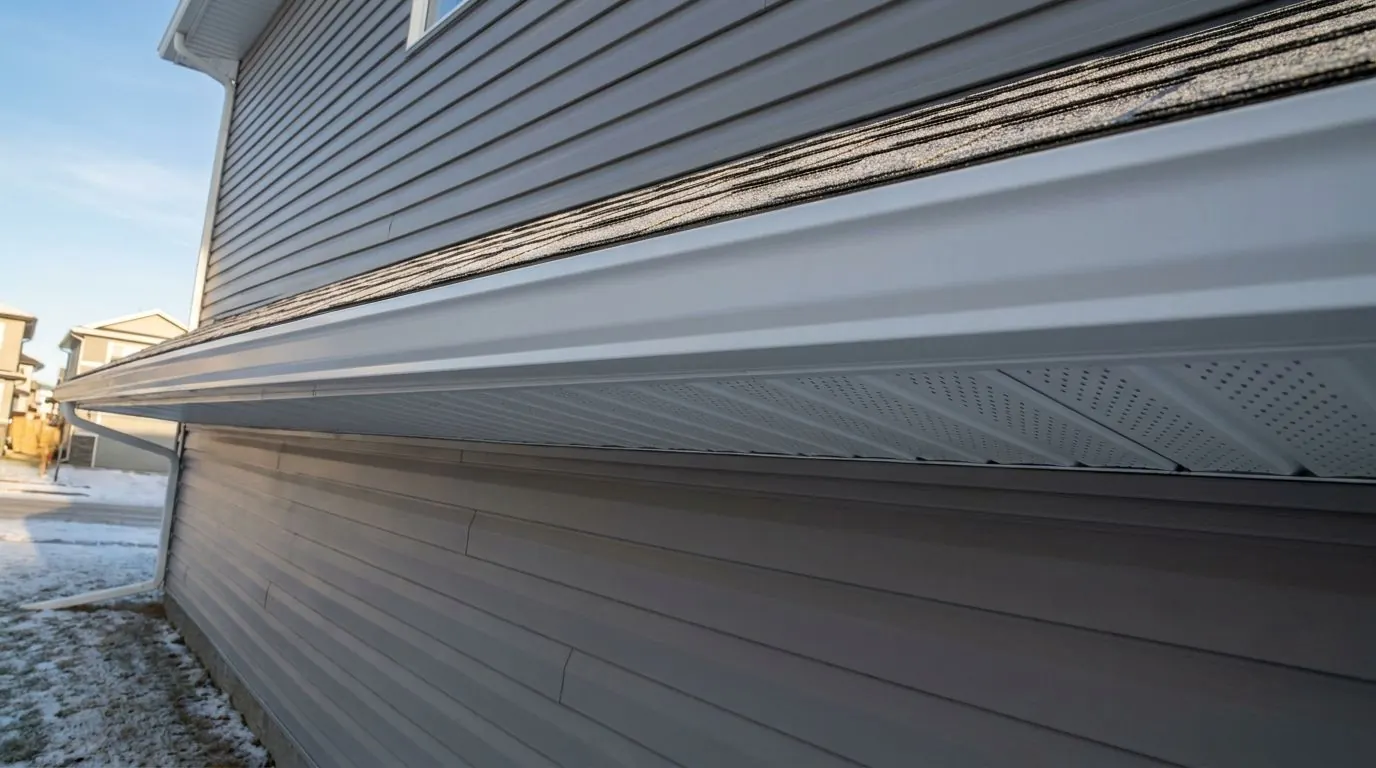
Vented & Solid Aluminum Soffit Installation
Vented and solid aluminum soffit that restores attic intake and keeps pests out.
How it works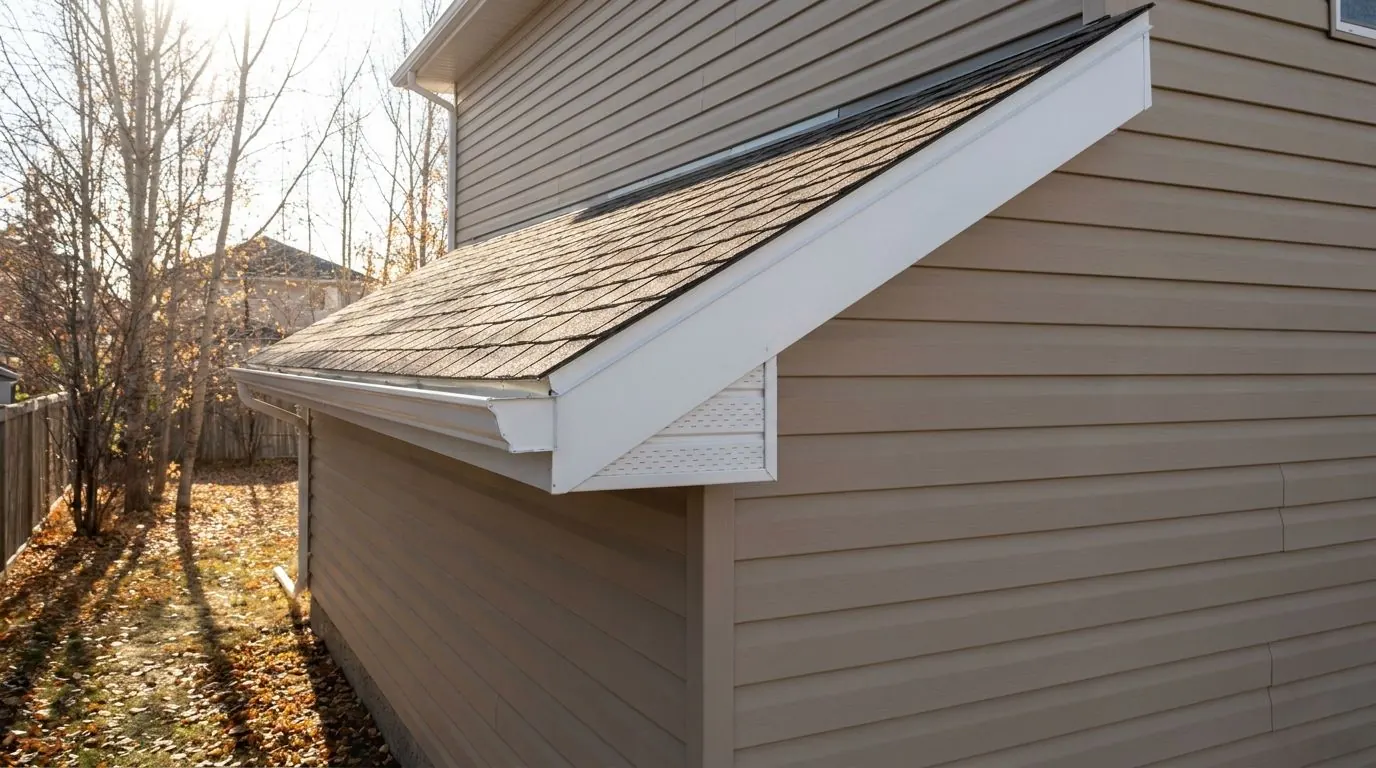
Heavy-Gauge Aluminum Fascia Capping
Brake-bent aluminum wrap for wood fascia, sealed at the ends and never repainted.
How it works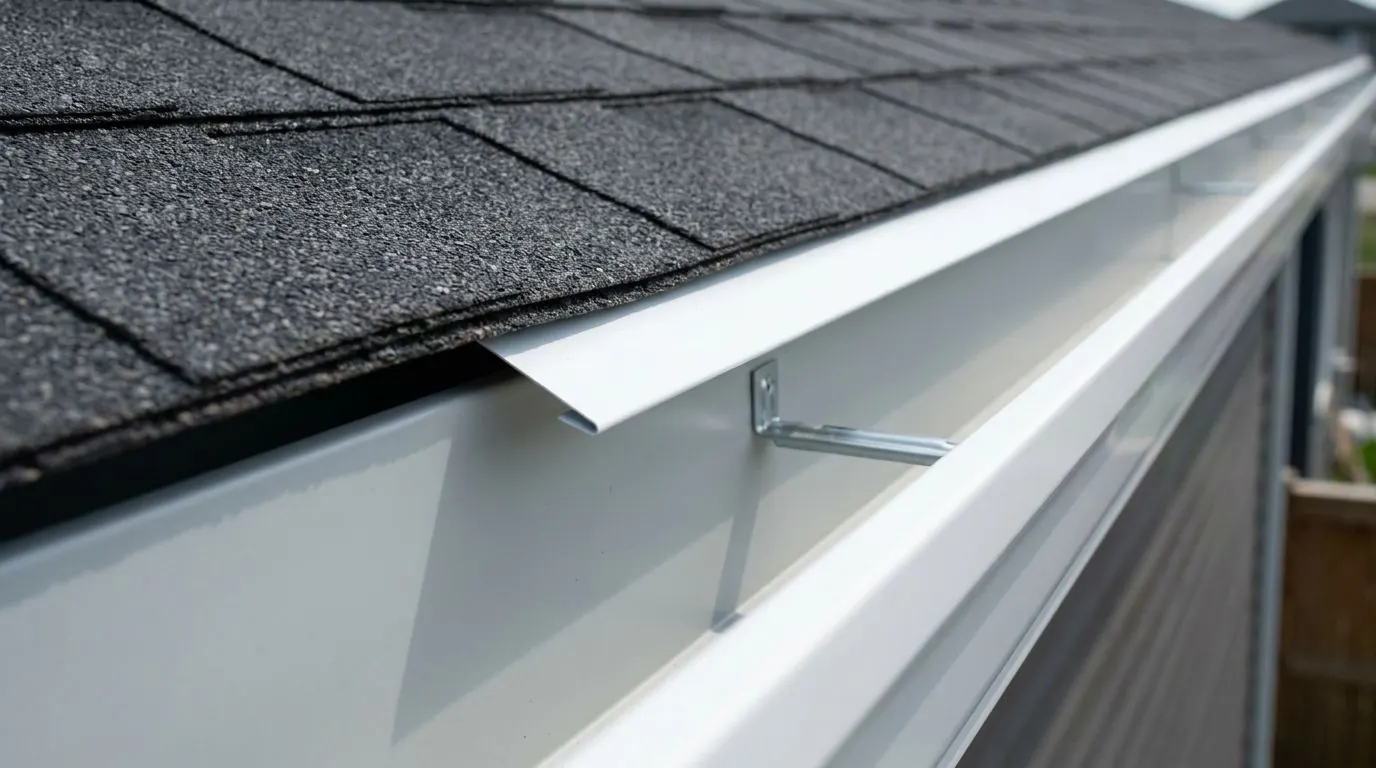
Aluminum Drip Edge Flashing
Eave and rake drip edge, including retrofits under existing shingles.
How it worksChoosing Between Them
- Attic frost, pests or hail-cracked panels
- Start with aluminum soffit. It restores attic intake where the eaves are meant to vent, closes the overhang against wasps, birds and bats, and replaces cracked vinyl with metal that dents rather than splits.
- Peeling paint on sound fascia
- Choose fascia capping. It wraps healthy wood boards in heavy-gauge aluminum bent to fit, ending the repaint cycle and protecting the wood behind the eavestrough.
- Wet stripes behind the eavestrough
- Look at drip edge flashing first. If water is running down the fascia behind a trough that isn’t leaking, a missing or short drip edge is the usual cause.
- Soft wood anywhere on the roof edge
- None of these three is the first step. Rotted fascia, sub-fascia or rafter tails get repaired through our rotted trim restoration service, then the new wood is capped and trimmed.
Soffit, Fascia & Drip Edge: Common Questions
In what order are drip edge, fascia capping, soffit and eavestroughs installed?
Is roof-edge trim a roofing job, a siding job or an eavestrough job?
Does switching to aluminum trim help with hail damage?
Other Eavestrough Services
Talk to Us About Soffit, Fascia & Drip Edge
Tell us about the house or building and what the water is doing. We will recommend the system that fits, including when a simpler one will do.