Downspouts, Extensions & Roof Water Drainage in Airdrie
An eavestrough only collects roof water; the downspout and what happens at its bottom decide whether that water protects your house or soaks your foundation. We size downspouts for the roof that feeds them, carry discharge well clear of the basement wall, and route it in line with the City of Airdrie's drainage rules.
How These Systems Differ
Every gutter system ends in a handful of downspouts, and each one gathers the water from a whole section of roof into a single stream. That makes the downspout both the busiest part of the system and the place where problems concentrate. If the drop is too small, the eavestrough overflows at the corner. If it empties against the wall, a full roof plane's worth of water soaks into the backfill beside the basement. If it ends on a lower roof, it wears a stripe in the shingles. Drainage management is about getting all three stages right: into the downspout, down the wall and away from the house.
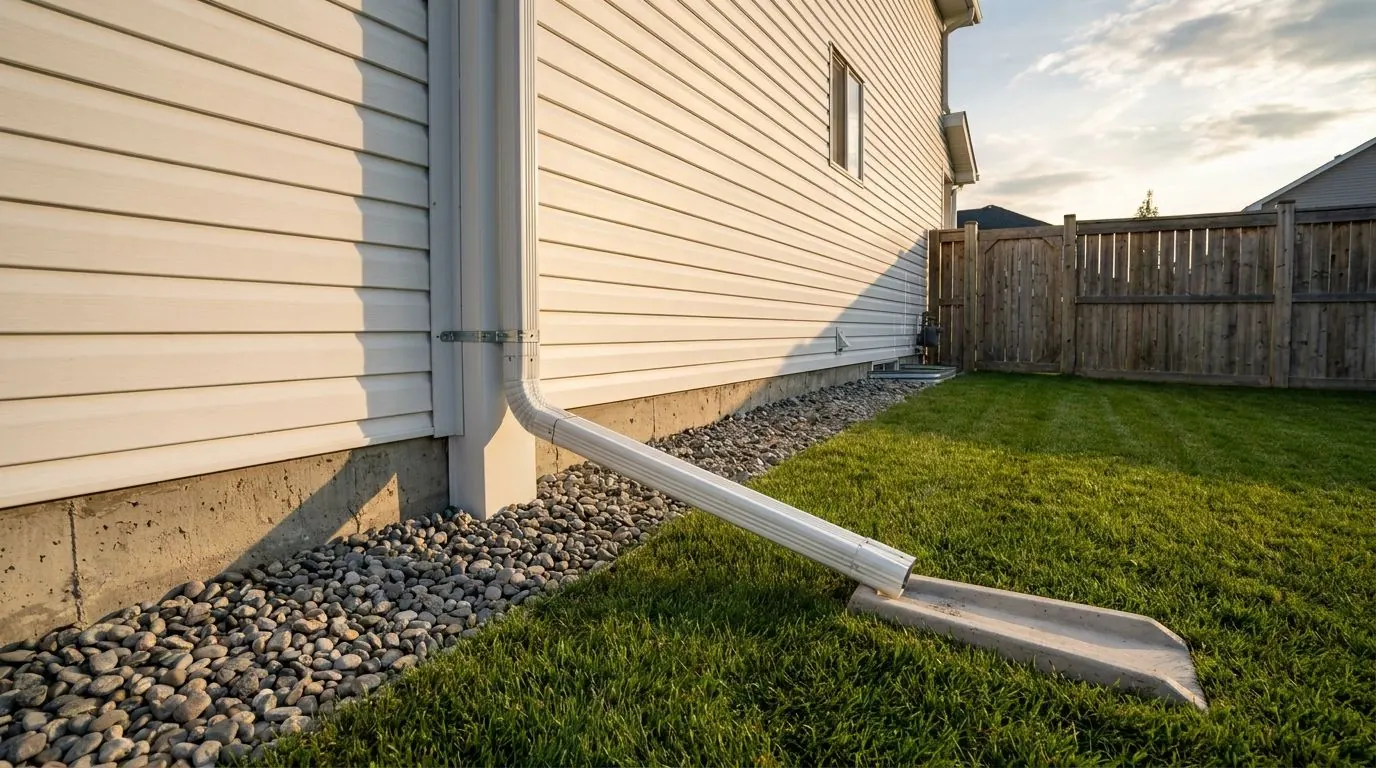
The services in this category each handle a different stage. Oversized 3x4 downspouts deal with capacity, giving water a larger opening with twice the cross-sectional area of a standard 2x3 so busy corners stop overflowing. Flip-up extensions and buried discharge lines deal with where water goes once it reaches the ground: a hinged surface extension carries it about two metres out where the lot allows, and a sloped smooth-wall line with a pop-up emitter carries it underground where it doesn't. Rain barrels with diverters let you keep some of that water for the garden without flooding the foundation when the barrel is full.
Upper-roof discharge handles a problem that sits partway down the system. On two-storey homes, upper downspouts often empty onto a garage or porch roof, and that concentrated flow erodes shingles, overshoots the lower eavestrough and builds ice in winter. Most houses need a combination of these services rather than one, so we follow the whole path of the water before recommending anything.
Downspouts & Drainage Services
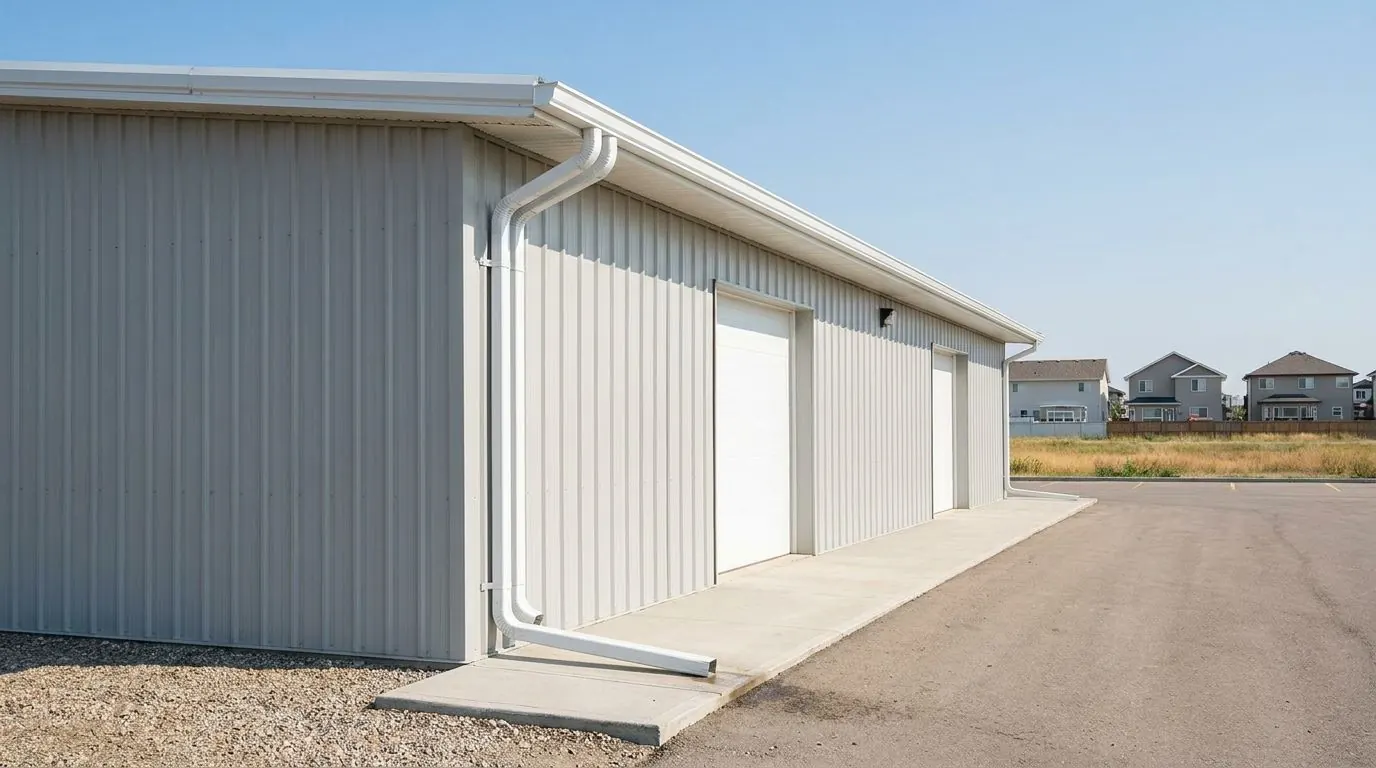
Oversized 3x4 Inch Commercial Downspouts
3x4 downspouts with double the opening of a 2x3, for busy roofs and commercial runs.
How it works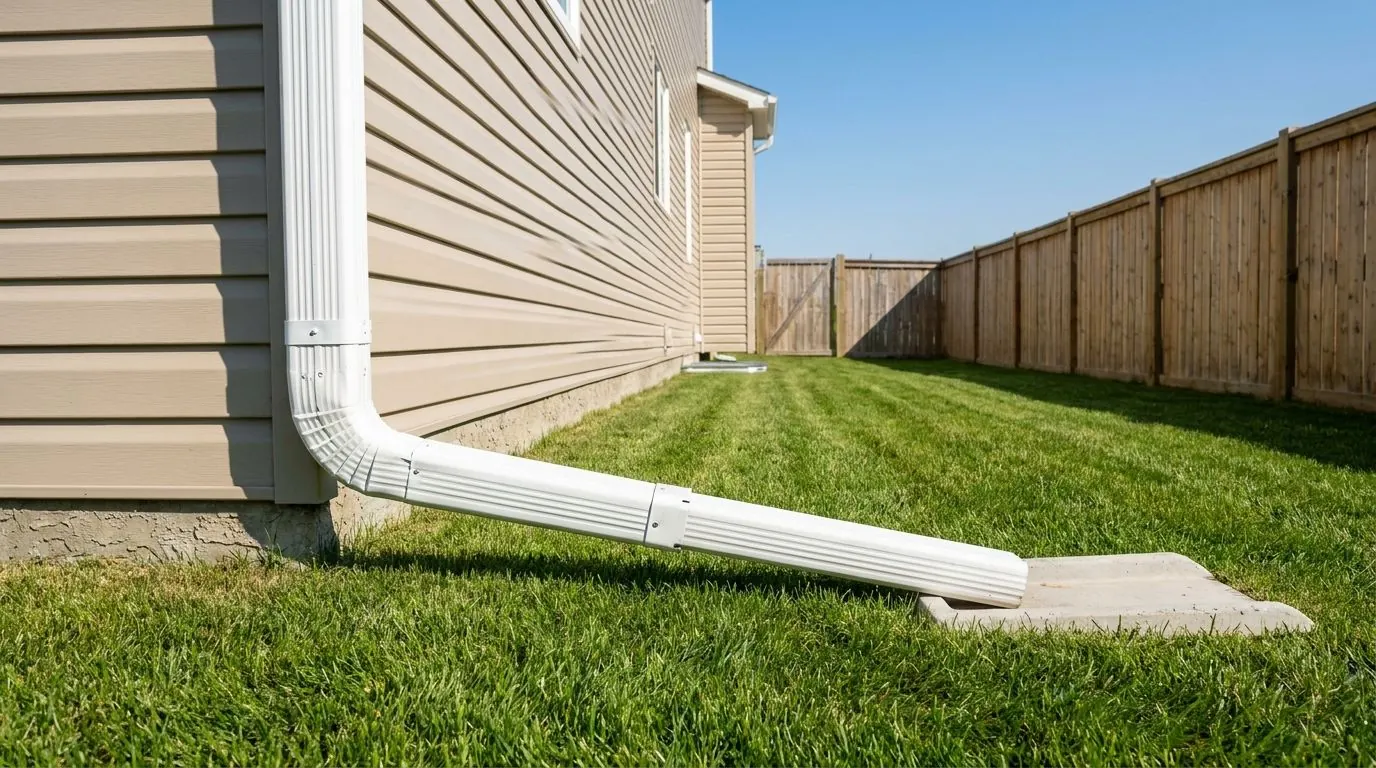
Flip-Up Downspout Extensions
Hinged extensions that carry roof water about 2 m out and lift for mowing.
How it works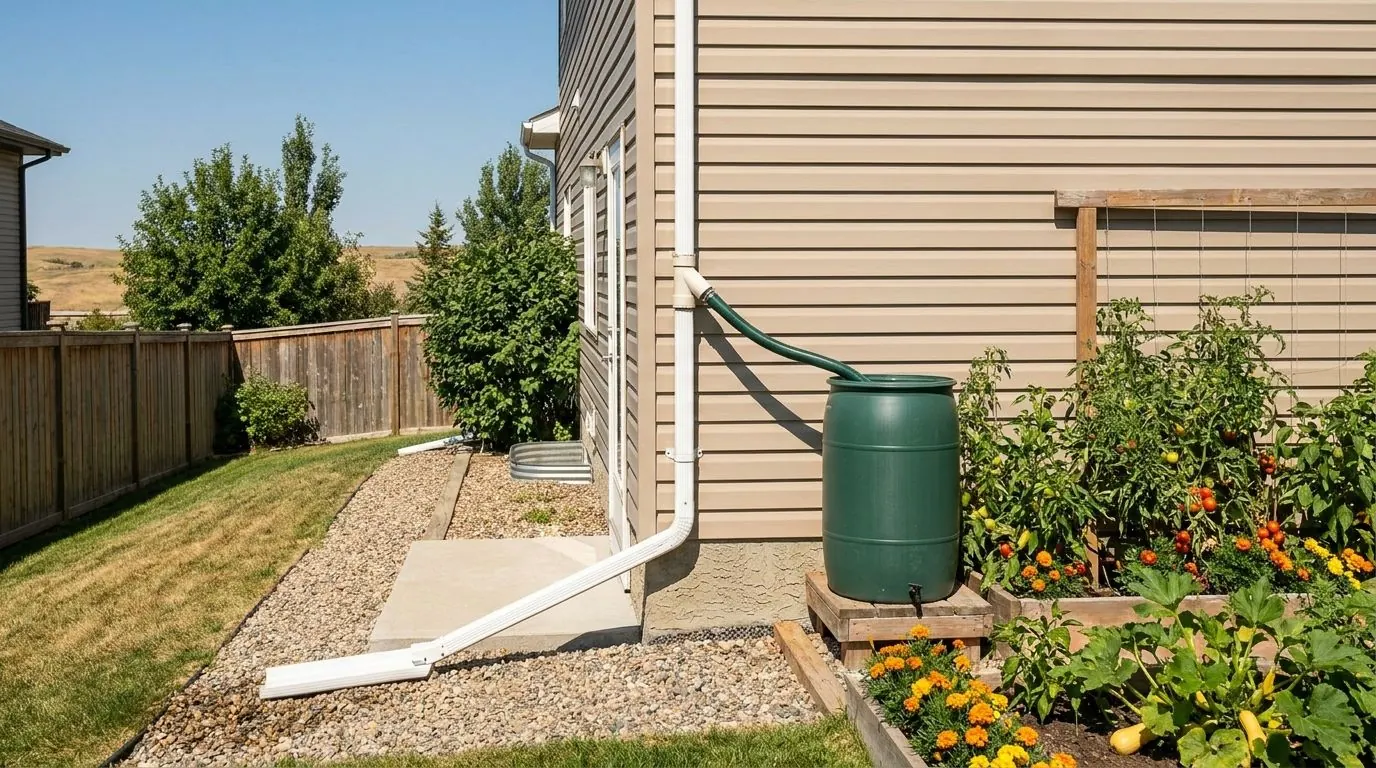
Underground Drainage Tie-Ins & Rain Barrels
Sloped buried lines, emitters, winter overflows and rain barrel diverters.
How it works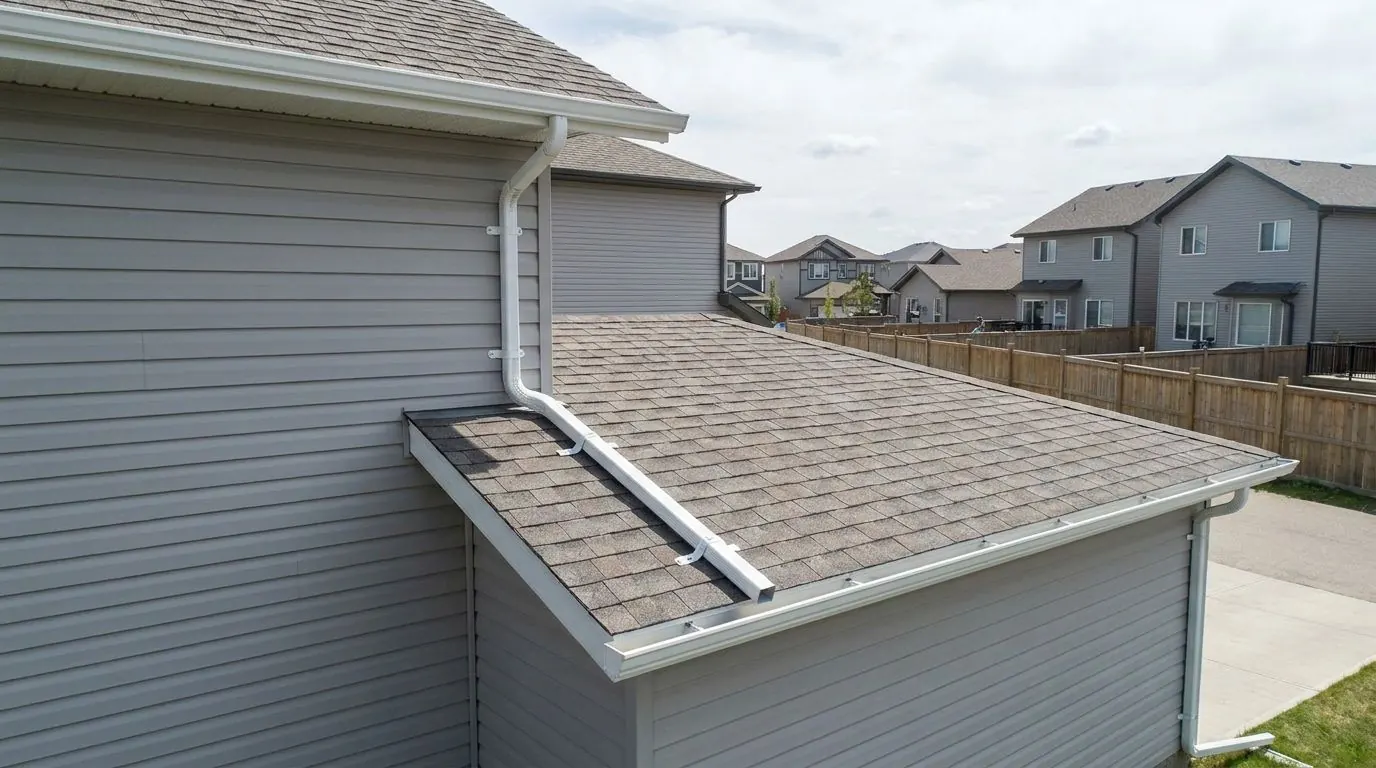
Upper-to-Lower Roof Discharge Elbows
Splash shoes and extension pipes that carry upper-roof water to the lower gutter.
How it worksChoosing Between Them
- Overflow at the corner: size the drop
- If a clean eavestrough spills over the lip right beside the downspout in heavy rain, the drop or its outlet is the bottleneck. A 3x4 downspout with a matching outlet, or a second downspout on a long run, is the fix.
- Water at the foundation: extend it
- If the downspout empties onto a splash block against the wall and there is open lawn beyond it, a flip-up extension carrying water about two metres out onto a splash pad is the simplest, most inspectable answer.
- No room on the surface: bury it
- Where a walkway, step, driveway or narrow side yard blocks a legal surface route, a smooth-wall buried line to a pop-up emitter or daylight outlet on your own lot, with a winter overflow, carries the water underground.
- Stripe on the lower roof: redirect it
- If an upper downspout lands on a garage or porch roof and the shingles below show a worn stripe or winter ice, a splash shoe, an extension pipe into the lower eavestrough or a wall reroute keeps the water off the shingles.
Downspouts & Drainage: Common Questions
How many downspouts does a typical Airdrie house need?
Can a downspout be moved to a different corner of the house?
Do downspouts have to be replaced when the eavestroughs are?
Other Eavestrough Services
Talk to Us About Downspouts & Drainage
Tell us about the house or building and what the water is doing. We will recommend the system that fits, including when a simpler one will do.