Rotted Soffit & Fascia Board Repair in Airdrie
A gutter pulling off the house, a soft spot at the corner of the roof or a soffit panel hanging loose usually means the wood behind it has rotted. We open up the roof edge on Airdrie homes, replace rotted fascia, sub-fascia, rafter tails and soffit boards, and only then close it in.
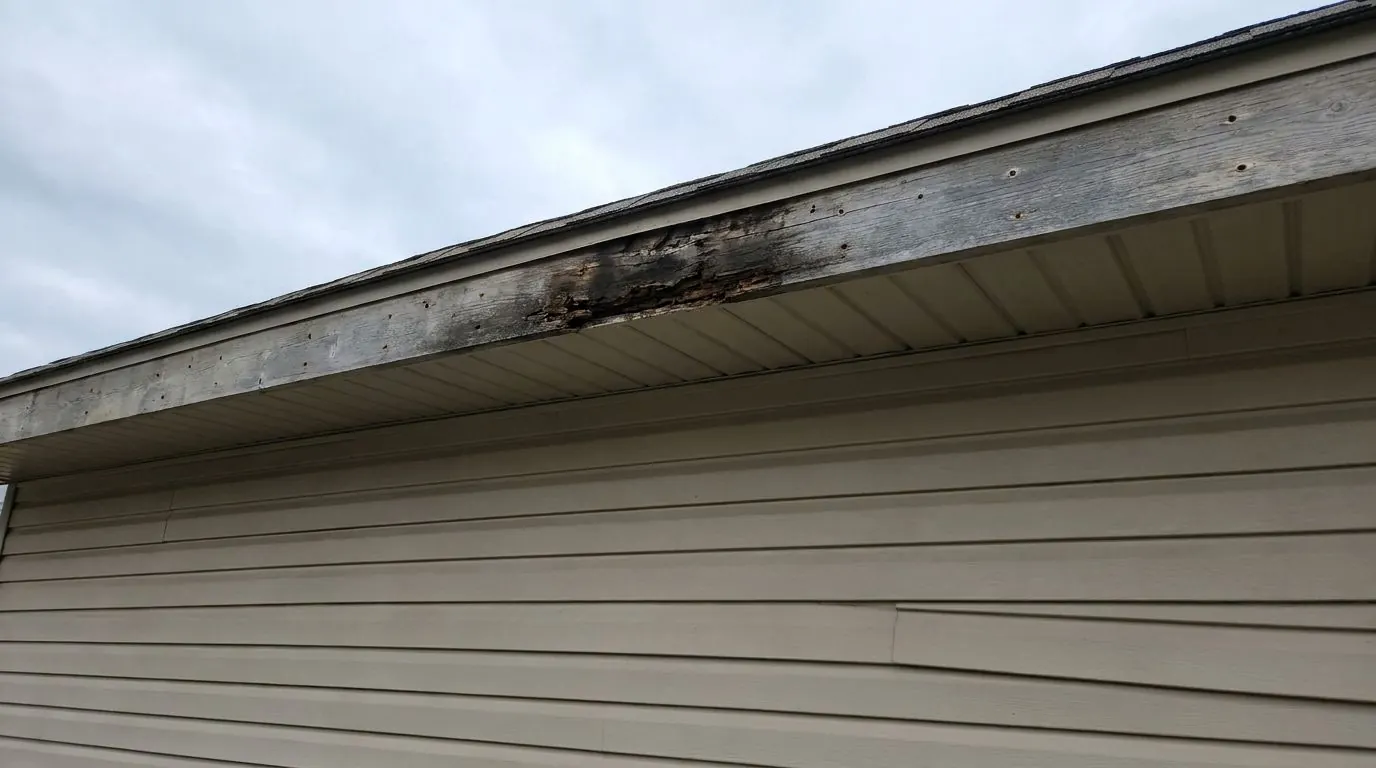
The Problem It Solves
Fascia boards and the wood behind soffit sit in the wettest spot on the outside of a house. The eavestrough hangs off the fascia, water that misses the gutter runs straight down its face, and any water that gets behind the trough soaks into the top edge of the board where no one can see it. On a house without drip edge, meltwater and rain wick back under the shingles' edge onto the fascia and roof deck every time it rains. Wood that stays damp through Airdrie's freeze–thaw cycles opens its paint film, checks and splits, and eventually softens into rot from the inside out.
Rot at the roof edge rarely looks dramatic from the ground. The first signs are small: paint peeling in a band along the top of the fascia, a dark streak behind a downspout, a gutter that won't stay pitched no matter how often the hangers are tightened, or a soffit board that droops at the corner. By the time a piece of fascia crumbles, the rot has often spread into the sub-fascia behind it and the ends of the rafters or trusses it is nailed to. Once the gutter spikes or hanger screws are sitting in soft wood, the next heavy load of ice or snow pulls the whole run off the house.
Rotted overhangs also let the outside in. Gaps at a softened soffit corner are exactly what birds, wasps and squirrels look for, and a nest in the overhang can block attic intake venting and bring further damage. Water that reaches the rafter tails can move up into the roof deck edge and top plate. The common response, wrapping the damaged wood in aluminum and moving on, hides all of this behind clean new trim. The rot keeps going underneath, the new hanger screws have nothing to bite into, and the problem comes back as a sagging gutter with a much larger repair behind it.
How It Works
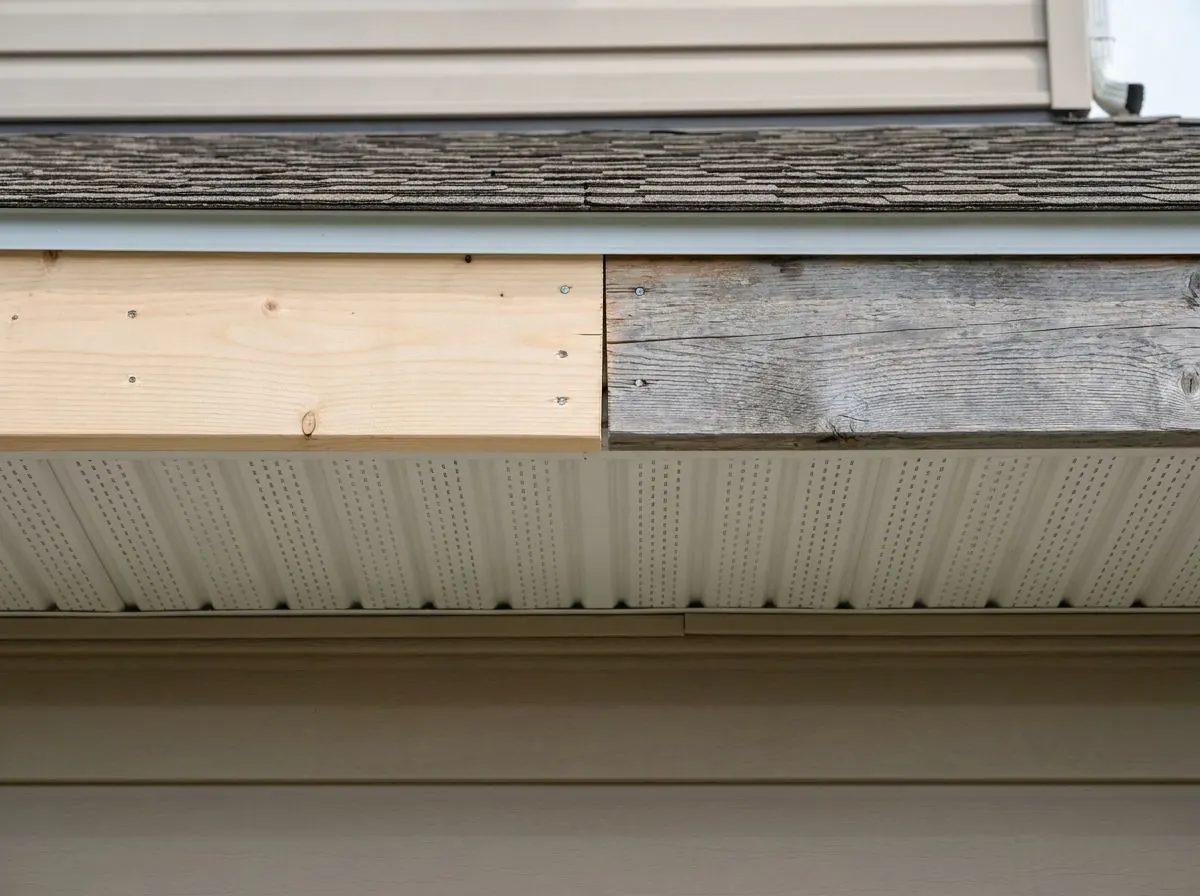
We do the carpentry before the cladding, every time. The job is to find all the rot, not only the piece you can see, then cut it out and rebuild the roof edge in sound wood. That means pulling the eavestrough and any existing trim off the damaged sections, probing every board along the eave, and following the damage back until the wood is solid. Rotted fascia and sub-fascia are replaced in full lengths wherever practical, soffit backing and boards are renewed, and damaged rafter or truss tail ends are cut back to sound wood and reinforced with new lumber fastened into the solid part of the framing.
New wood is only half of a lasting repair. The other half is stopping the water that rotted the old wood. Before anything is closed up, we identify the source: missing drip edge, a mitre that has been leaking for years, a trough pitched backward so water sits against the fascia, an upper downspout soaking one corner, or overflow from an overloaded outlet. That cause is corrected as part of the job, or written down clearly if it belongs to a roofer, so the new boards don't start the same cycle over again.
Once the framing and boards are sound and dry, the roof edge is closed in with prefinished aluminum fascia capping and aluminum soffit, vented where the attic needs intake air, and the eavestroughs are re-hung with hidden hangers screwed into solid wood. What you get is a roof edge that holds the eavestrough firmly through winter ice and snow loads, trim that doesn't need painting, overhangs sealed against pests, and the confidence that nothing rotten has been hidden behind the new metal.
How the Job Runs, Step by Step
Probe the full eave line
We check every accessible run of fascia and soffit with an awl, not only the obvious bad spot, and mark soft wood, stains, loose fasteners and gaps. Checking from a ladder at the eave catches damage that looks fine from the driveway, especially along the top edge behind the gutter.
Remove gutters and trim over damage
We take down the eavestrough runs and any old capping or soffit over the damaged sections and set salvageable material aside. Opening the overhang shows how far the rot really goes, and we show you the exposed wood before agreeing on the extent of replacement.
Cut out rot and repair framing
Rotted fascia, sub-fascia and soffit boards come out back to sound wood. Damaged rafter or truss tails are cut back and sistered or scabbed with new lumber fastened into solid framing. Where rot reaches the roof deck itself, we stop and bring in a roofer rather than guess at it.
Install sealed new wood
Replacement boards are matched to the existing depth so the roof edge stays straight, sealed or primed on every face and cut end, and fastened into solid framing. Soffit backing is rebuilt so panels have firm support, and attic intake paths are left open where the overhang is vented.
Fix the water source and close in
We correct the leak that caused the rot, then wrap the new fascia with prefinished aluminum capping tucked under the drip edge, install aluminum soffit, and re-hang the eavestroughs on hidden hangers screwed into the new wood. A final water test confirms the roof edge now stays dry.
What Decides the Specification
The extent of the carpentry decides almost everything. Surface rot limited to the face of a fascia board is a straightforward board replacement; rot that has travelled into the sub-fascia and tail ends means framing repair, more time at the roof edge, and on some homes a check with the municipality about permits. Overhang construction matters as well. Older Airdrie houses often have wood soffit boards or plywood panels nailed directly to the rafter tails, while others have lookouts and a ledger that support the soffit separately, and each one is rebuilt differently.
Material choices are about staying sound for the long term. Replacement boards are dimensional lumber matched to the existing size so the new aluminum capping lies flat and the gutter line stays true. Every cut end gets sealed, because end grain is where water soaks in first. The aluminum that closes the roof edge is prefinished coil, so there is no paint film to fail, and the eavestroughs go back up on hidden hangers driven into solid wood rather than spikes that loosen as wood shrinks and swells. Where the original fascia depth is unusual, the capping is bent to suit rather than forcing a standard size.
Code, Bylaw and Manufacturer Notes
Replacing soffit or fascia cladding on an existing house generally doesn't need a building permit in Alberta, but repairing structural framing such as rafter or truss tails may, and requirements vary between the City of Airdrie, Rocky View County, Cochrane, Crossfield and Irricana. We check with the municipality before structural work starts rather than assuming either way. Where rot has reached the roof sheathing or the roof itself needs replacing, that work falls under roofing, and the National Building Code – 2020 Alberta Edition's eave protection requirements apply to the new roof, so it goes to a roofer.
Shingle manufacturers' instructions call for drip edge at the eaves, and adding it where it was left out is often the single most useful step against future fascia rot. If the overhang is vented, the attic ventilation general rule of at least 1/300 of the insulated ceiling area, split between soffit and roof vents, is worth keeping in mind, so we don't close off intake that the attic relies on. Work at the roof edge is carried out with fall protection in line with Alberta OHS requirements.
General guidance only. The municipality, its bylaws and the manufacturer’s installation instructions decide what applies to your job.
Around Airdrie
Rotted fascia is most common in Airdrie's older areas. Homes in Hillcrest, Old Town and Big Springs were largely built from the 1970s to the 1990s, and it is common for houses of that age to still have their original painted wood fascia and wood or plywood soffit. Many houses of that era were built without drip edge, or have had eavestroughs replaced more than once with new spikes driven into old holes. After decades of chinook freeze–thaw, even well-kept houses in these neighbourhoods commonly have soft spots at inside corners, below valleys and behind downspout outlets, where water has been concentrated for years.
Mature trees make the situation worse. The older streets of Old Town and Hillcrest have more mature spruce and deciduous trees than newer subdivisions, which means more needles and leaves in the eavestroughs, more overflow, and shade that keeps the north side of the house damp longer after rain. Hillcrest homes that were capped in aluminum during an earlier renovation deserve a careful probe, because capping often hides the fascia's condition entirely. The same checks apply to acreage homes and outbuildings in Rocky View County, where the roof edge may have gone longer between repairs.
Often Done Alongside
Heavy-Gauge Aluminum Fascia Capping
Brake-bent aluminum wrap for wood fascia, sealed at the ends and never repainted.
Vented & Solid Aluminum Soffit Installation
Vented and solid aluminum soffit that restores attic intake and keeps pests out.
Corner Joint Re-Sealing & Leak Repair
Leaking corners, end caps and outlets stripped, re-sealed, riveted and water-tested.
Where We Do This Work
Rotted Trim Restoration: Questions We Get
How do I know if my fascia board is rotten behind the gutter?
Can't you just wrap the rotted fascia in aluminum?
What if the rafter tails are rotted too?
Will the new wood rot again?
How do you work out what my eavestroughs actually need?
Considering Rotted Trim Restoration?
Call Airdrie Gutters or send the details. We will look at the job, tell you whether rotted trim restoration is the right fix, and price it in writing.