Eavestrough Maintenance & Replacement for Airdrie Property Managers and Condo Boards
A townhouse complex or a commercial building has hundreds of metres of eavestrough, dozens of downspouts and a board or an owner who hears about every overflow. A single plugged outlet over an entry can turn into an icy walkway by morning, and a run of loose hangers along one building usually means the same thing is starting on the next.
We work for property managers, condo boards and commercial property owners around Airdrie, Balzac and north Calgary. The work is planned maintenance, repairs as they come up, and replacement after hail, carried out around residents, tenants and traffic, with a written record of what was done at each building.
Scheduled cleaning and flushing
Troughs hand-scooped into bags, then flushed, and downspouts cleared with a flush or an auger where elbows are packed. Spring and fall are the usual visits; buildings near mature trees may need more. Each visit ends with a building-by-building note of what we found.
Leaks and sags fixed properly
Leaking mitres and end caps get the old sealant stripped to bare metal and re-sealed with gutter-grade sealant, riveted where needed. Sagging runs are re-pitched and re-anchored into solid wood. Caulking over dirt and old sealant tends to fail within a season, so we do not do it.
Hail damage documented
After a storm we record dented troughs, crushed downspouts, cracked soffit and damaged fascia with photos and measurements, building by building, for the insurance claim. The insurer and adjuster decide coverage. Replacement often uses heavier .032" coil.
Capacity for bigger roofs
Multi-family and commercial roofs often need 6-inch or larger profiles, 3x4-inch or larger downspouts, and occasionally built-in box gutters. When a run keeps overflowing in heavy rain, the fix is often more capacity at the outlet rather than more cleaning.
Working around occupants
Notices ahead of the visit, ladders and lifts kept clear of entries and parking where possible, and fall protection in line with Alberta OHS. We plan the order of buildings with the manager so residents and tenants are disrupted as little as the work allows.
Ice at entries and walkways
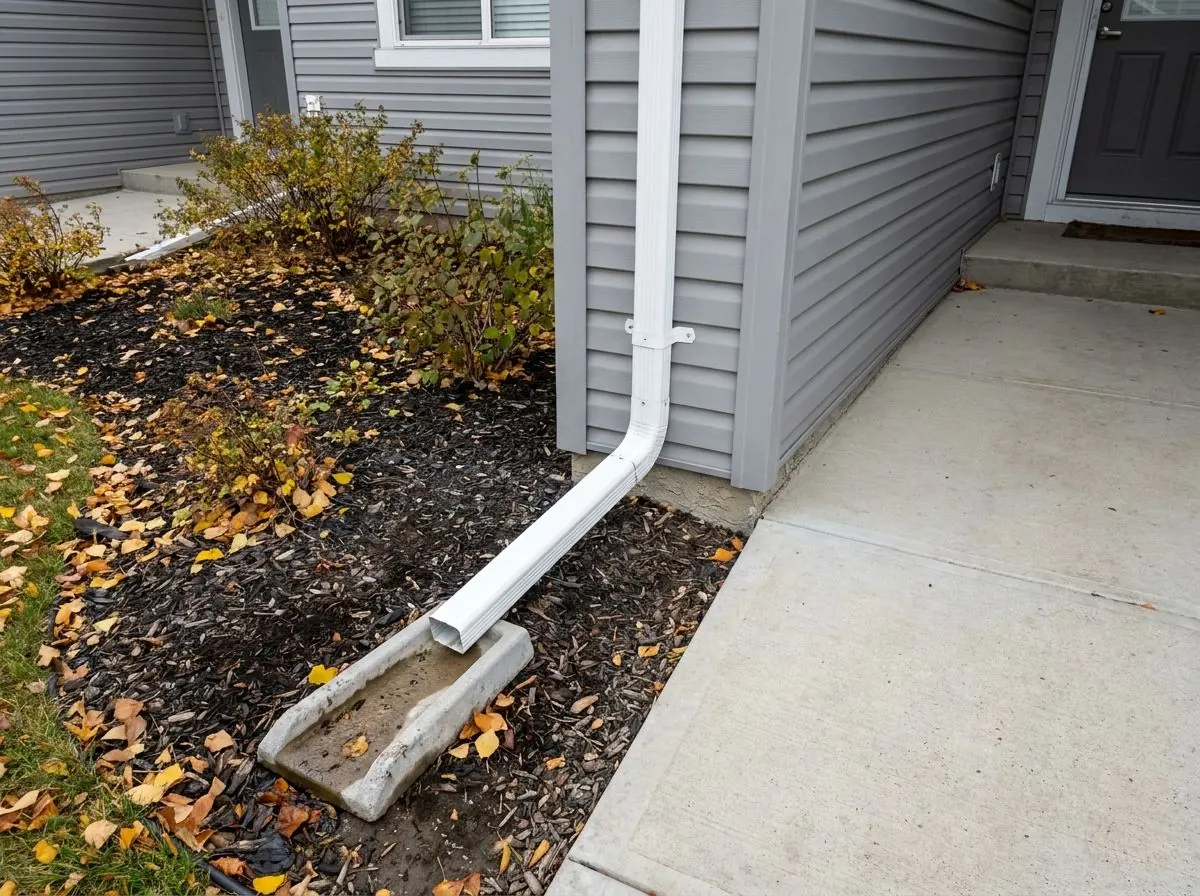
Downspouts that discharge across sidewalks and entries freeze into hazards during chinook thaw and refreeze cycles. Rerouting discharge away from walkways, adding a downspout so one outlet isn't carrying a whole roof, and correcting trough slope above entries are options we price building by building.
What a maintenance program looks like with us
- A walk of the site to count buildings, measure runs, note downspout locations and see what access each building needs
- A written scope per visit: which buildings, cleaning and flushing, and a list of repairs found, priced separately so the board can approve them
- Visits scheduled around the seasons, with notice to residents or tenants from the manager ahead of time
- Photos of problem areas and a building-by-building report after each visit, suitable for board minutes or a reserve fund study
- After hail, a damage record per building for the insurance claim, before anything is removed
Services That Come Up Most
Commercial & Multi-Family Gutter Maintenance
Gutters and maintenance programs for complexes, commercial bays and farm buildings.
Gutter Cleaning & Downspout Flushing
Hand-scooped troughs, flushed downspouts, augered elbows and a written report.
Corner Joint Re-Sealing & Leak Repair
Leaking corners, end caps and outlets stripped, re-sealed, riveted and water-tested.
Sagging Gutter Re-Pitching & Re-Anchoring
Drooping eavestroughs re-pitched and re-anchored into solid wood, with rot found first.
Airdrie Hail & Storm Damage Replacement
Hail-dented eavestroughs documented for your claim and replaced in heavier coil.
Oversized 3x4 Inch Commercial Downspouts
3x4 downspouts with double the opening of a 2x3, for busy roofs and commercial runs.
Flip-Up Downspout Extensions
Hinged extensions that carry roof water about 2 m out and lift for mowing.
Micro-Mesh Gutter Guards
Stainless mesh guards that stop needles, seeds and shingle grit at the gutter.
Property Managers & Condo Boards: Questions
How often should a townhouse complex have its gutters cleaned?
Can you give the board a report it can act on?
Should we replace every building at once after hail?
Also see
Managing a complex or commercial building?
Book a site walk, and we will come back with a written maintenance scope, a list of repairs found, and a record you can take to the board.