Eavestrough Cleaning & Downspout Flushing in Airdrie
Clogged eavestroughs overflow at the foundation and freeze solid in winter. We hand-scoop and bag the debris, flush every trough and downspout with controlled pressure, auger blocked elbows, check outlets and buried lines, and leave you a written report of what we found.
The Problem It Solves
An eavestrough only works if water can move along it. In Airdrie the material that stops it is rarely a thick layer of leaves. On newer streets it is shingle granules, seeds, cottonwood fluff and windblown prairie dirt that settle into a dense sludge along the bottom of the trough. Near mature landscaping, spruce needles knit that sludge into a mat. Either way, the trough gets shallower every season, the outlet narrows, and a system sized to carry a summer downpour starts overflowing in an ordinary rain.
Overflow does its damage quietly. Water pours over the front lip in a sheet and lands next to the foundation, where Airdrie's slow-draining clay soil lets it soak down along the backfill toward the basement wall. It splashes dirt onto siding and windows, erodes the bed below, and runs across walkways. Meanwhile the wet debris left in the trough holds moisture against the aluminum and the corner seals, adding weight and giving sealant a reason to fail earlier than it should. A downspout blocked at its bottom elbow can fill like a pipe and split at a seam.
Winter makes a clogged system worse. Chinook thaws send meltwater into troughs that cannot drain, and the next hard freeze locks debris and water into a solid block of ice. Ice-packed troughs are heavy, they push water back toward the roof edge, and they turn every downspout into a column of ice that will not clear until spring. Buried downspout lines are an extra blind spot: a line packed with granules backs up at the tie-in, and nobody notices until the downspout overflows at ground level against the house.
How It Works
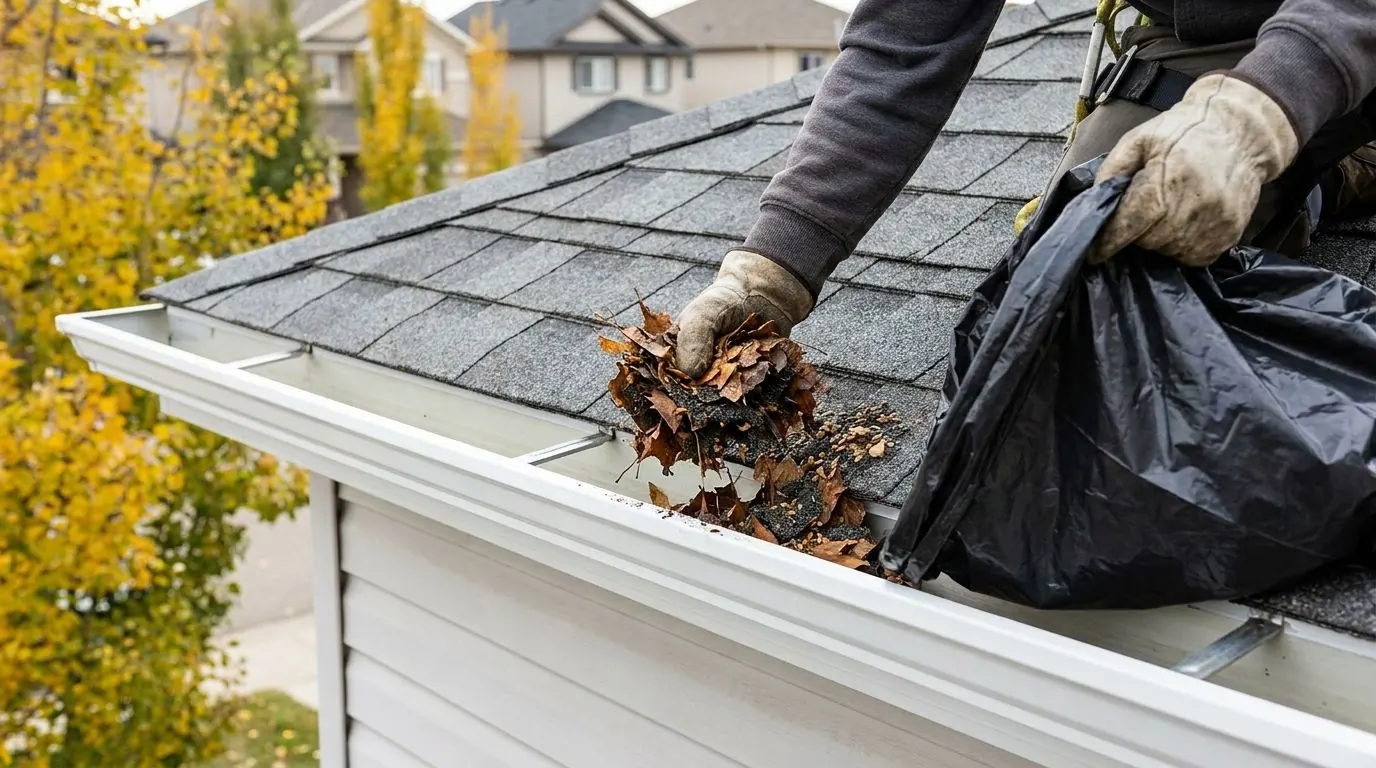
We clean by hand first. Every trough is scooped out along its full length and the debris goes into bags, not onto your lawn, your shingles or the neighbour's yard. Hand scooping removes the heavy sludge and needle mats that water alone tends to push toward the outlet, where they cause the next clog. While we are in each run, we look at the corners, end caps, hangers and fall, because a clean trough is the only time those details are easy to see.
Then we flush. Water runs through each trough from its high end, and we watch it travel to the outlet and out the bottom of the downspout. Anything slow gets attention: elbows and offsets are cleared with a plumbing-style auger or a pressurised flush, working from the bottom where possible so debris comes out rather than being packed further in. We keep pressure moderate. The service is thorough, but blasting water at high pressure into a trough can drive it behind the fascia or up under the first course of shingles, and that creates the leak you were trying to prevent.
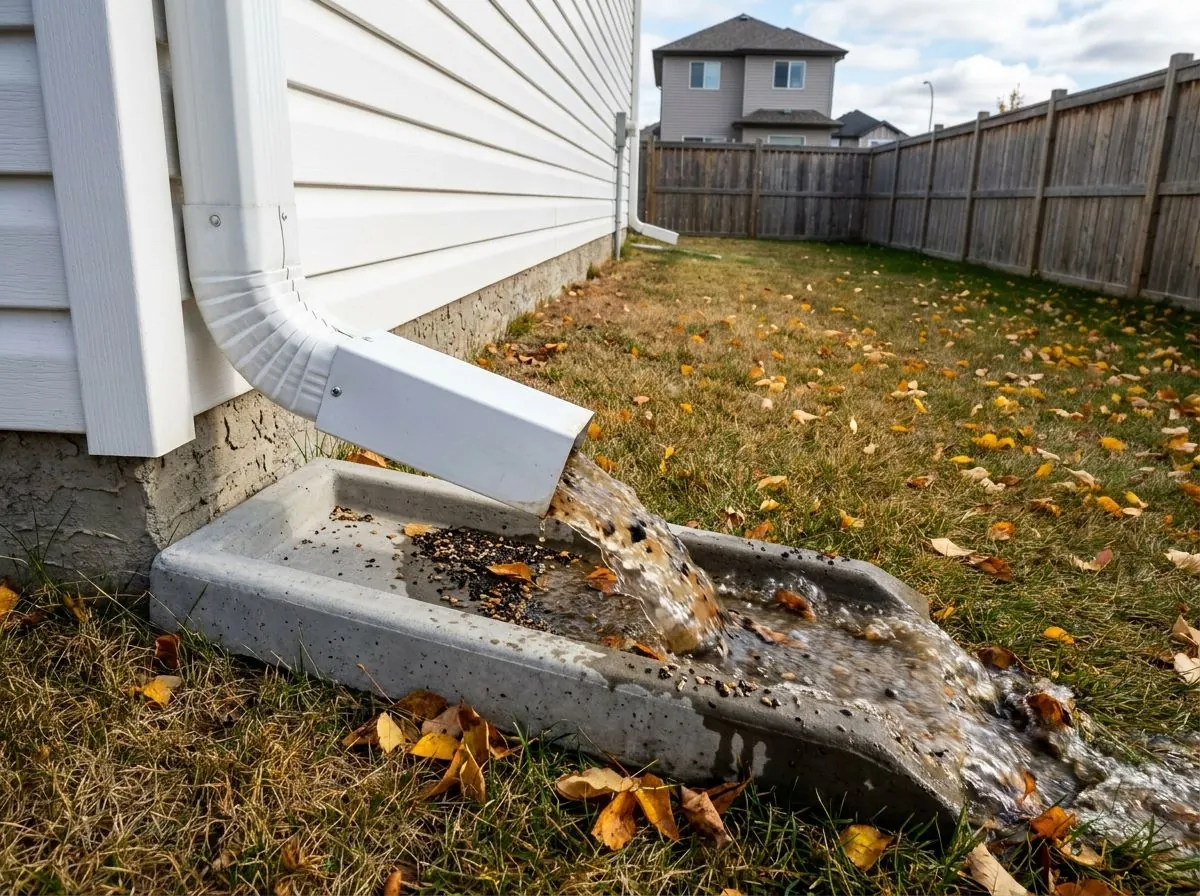
Finally we check where the water goes. Where a downspout feeds a buried line, we flush it at the tie-in and confirm flow at the pop-up emitter or daylight outlet if it can be found. Extensions and splash pads are put back in place. You receive a written report listing what we cleared, how each downspout ran, and anything we noticed along the way: leaking joints, sagging sections, loose or missing hangers, dents or soft fascia. You get a clear picture of your eavestroughs, not just a claim that they were done.
How the Job Runs, Step by Step
Walk the drainage path first
Before a ladder goes up, we walk the house and look at each downspout, extension, splash pad and buried-line tie-in. Staining on siding and erosion below the eaves show where overflow has been happening. That tells us which runs and outlets to watch most closely.
Hand-scoop and bag every run
Each trough is scooped by hand along its full length, including corners and the area around outlet openings. Debris goes into bags and leaves with us. Roof valleys dropping into the eavestrough are cleared of loose debris within reach of the ladder.
Flush troughs to their outlets
Water is run from the high end of each trough to confirm it drains fully to the downspout with nothing left standing. Slow sections and standing water are noted. Remaining grit is rinsed toward the outlet and out, rather than left to settle again.
Clear downspouts and elbows
Blocked downspouts are opened with an auger or a controlled pressurised flush through elbows and offsets. We confirm full flow out the bottom. Where the downspout ties into a buried line, we flush the line and look for flow at the emitter or daylight end.
Reset and report
Flip-up extensions and splash pads are set back in their working position. We then write up what we cleared and what we saw: joints that drip, runs that hold water, hangers that have let go, damage or soft wood. You get a list of issues, with none of them turned into a sales pitch.
What Decides the Specification
How often a house needs cleaning depends on what lands on its roof. Most Airdrie homes are well served by a spring clean after the snow melts and a fall clean once seeds and leaves have come down, before freeze-up. Homes backing onto mature spruce, poplar or cottonwood, and acreages with shelterbelts, often need a mid-summer visit as well. Shingle age matters too: a roof shedding granules fills troughs faster than one that is newer. The spec on each visit also depends on access, roof pitch and height, and whether the downspouts feed buried lines.
The equipment is chosen for the blockage, not for show. Hand scoops handle sludge and mats. A garden-style flush handles grit. Elbows and offsets that pack solid get an auger, and a stubborn buried line may need a pressurised flush from the tie-in. Pressure stays moderate because the goal is flow, not force. If your eavestroughs clog repeatedly, a guard is worth discussing; micro-mesh stops fine grit and needles, and even guarded systems still need an occasional flush. Our report tells you whether that conversation is worth having.
Code, Bylaw and Manufacturer Notes
Cleaning is maintenance and needs no permit, but where the water goes afterward is regulated. The City of Airdrie's drainage bylaw (B-03/2014) and Community Standards Bylaw ask that downspout discharge be directed away from the building and not onto neighbouring property, stairs, landings or walkways, and that downspouts sit at least two metres from a swale and not end less than two metres from the property line. When we reset extensions after a clean, we put them back into a working position; if an outlet is discharging where it should not, we note it in the report.
Buried downspout lines must never be tied into the sanitary sewer, and if you find one that appears to be, check with the municipality. Rocky View County, Cochrane, Crossfield, Irricana and Calgary each set their own drainage rules, so check with the right authority outside Airdrie. Working at height is governed by Alberta occupational health and safety requirements for fall protection. That is part of why a two-storey clean is a job to hand off rather than a weekend project from a borrowed ladder.
General guidance only. The municipality, its bylaws and the manufacturer’s installation instructions decide what applies to your job.
Around Airdrie
Woodside grew up around the golf course through the 1990s and 2000s, and it holds more mature trees than Airdrie's newer subdivisions, dropping needles, seeds and leaves into the eavestroughs. Runs under mature trees clog faster than runs on open streets, and those are the houses where a mid-summer clean pays off. The Canals, largely 2000s and 2010s housing, typically sees a different load: seeds and fluff blowing off the landscaped paths, plus shingle granules from roofs now reaching the age where they start to shed. There the sludge is fine and dense, and it hides in downspout elbows.
Ravenswood is newer growth with few large trees, and homeowners there often assume their eavestroughs stay clean. What typically builds up is windblown prairie dirt and granules from newer roofs settling into a grey paste that slows outlets, and buried downspout lines may never have been flushed since the house was built. The same pattern runs through newer subdivisions in Balzac and north Calgary, while acreages in Rocky View County with shelterbelts behave more like Woodside. Our schedule advice follows what the report shows your house actually collects.
Often Done Alongside
Micro-Mesh Gutter Guards
Stainless mesh guards that stop needles, seeds and shingle grit at the gutter.
Oversized 3x4 Inch Commercial Downspouts
3x4 downspouts with double the opening of a 2x3, for busy roofs and commercial runs.
Underground Drainage Tie-Ins & Rain Barrels
Sloped buried lines, emitters, winter overflows and rain barrel diverters.
Where We Do This Work
Cleaning & Flushing: Questions We Get
How often should eavestroughs be cleaned in Airdrie?
Do you use a pressure washer on the eavestroughs?
What is in the cleaning report you leave?
Can you clean eavestroughs that are frozen solid?
Can eavestroughs be installed in an Airdrie winter?
Considering Cleaning & Flushing?
Call Airdrie Gutters or send the details. We will look at the job, tell you whether cleaning & flushing is the right fix, and price it in writing.